


"GeCKO Libraries"
v-myb Myeloblastosis Viral Oncogene Homolog (avian) Adenovirus (Ad-c-Myb)
Supplier: Vector Biolabs
The Myb family of transcription factors regulate differentiation and cellular growth through binding to promoters with the consensus sequence 5'-AAC(G/T)G-3' and transactivating gene expression. The proto-oncogene c-Myb is the cellular homolog of the leukemogenic avian retroviral protein v-Myc, and c-Myc is expressed predominantly in immature and rapidly dividing hematopoietic cells. Additional members of the family include B-Myb, a 110 kDa protein that is expressed in a wide variety of proliferating cells at the G1 to S phase transition, and A-Myb, which is expressed in reproductive tissues, some neural cells and a subset of normal and neoplastic B lymphocytes. Transactivation properties of B-Myb are apparently dependent upon the protein's hyperphosphorylation at several C-terminal residues, including Thr 447, Thr 490, Thr 497 and Ser 581. Dmp1 is related to the Myb family and also functions as a transcriptional activator. Dmp1 contains three tandem Myb repeats and is a putative substrate for cyclin D-dependent kinase.
Expand 1 Items
Plasminogen Activator Inhibitor-2/Serpin Peptidase Inhibitor, Clade B (Ovalbumin), Member 2 Adenovirus (Ad-Pai-2)
Supplier: Vector Biolabs
PAI-1 and PAI-2 (plasminogen activator inhibitor-1 and -2) are members of the serpin serine proteinase inhibitor family. PAI-1 and PAI-2 regulate uPA (urokinase-type plasminogen activator) and TPA (tissue plasminogen activator), resulting in the inhibition of proteolytic activity. Members of the serpin family generally complex with their target proteinases, then disassociate slowly into cleaved species that fold into stable inactive forms. PAI-1 can fold into the inactive state without cleavage resulting in the latent form of PAI-1. Activity can be restored to the latent form of PAI-1 through denaturation and renaturation. PAI-2 occurs in secreted and cytosolic forms through facultative polypeptide translocation.
Expand 1 Items
Scramble shRNA (AAV serotype 6) AAV (AAV6-GFP-U6-shRNA)
Supplier: Vector Biolabs
This AAV expresses a scramble shRNA sequence under the control of U6 promoter, with the GFP co-expression under a CMV promoter. This AAV is a serotype 6 virus (with Capsid from AAV6 and ITR from AAV2).
Expand 1 Items
Platelet-derived growth factor receptor, beta polypeptide Adenovirus (Ad-PDGF-R(beta))
Supplier: Vector Biolabs
The platelet derived growth factor receptor (PDGFR) family comprises PDGFR-(alpha) and PDGFR-(beta), which are structurally related and endowed with protein tyrosine kinase domains. These receptors bind the three PDGF ligand isoforms with different affinities. PDGFR-(alpha) can bind to both A and B subunits of PDGF, while PDGFR-(beta) can only bind the B subunit. Chromosomal translocation of the PDGFR-beta gene is linked with chronic myelomonocytic leukemia (CMML), a myelodysplastic syndrome, and demonstrates the oncogenic potential of the PDGF receptors.
Expand 1 Items
Tyrosine 3-Monooxygenase/Tryptophan 5-Monooxygenase Activation Protein, Beta Polypeptide Adenovirus (Ad-14-3-3b)
Supplier: Vector Biolabs
This gene encodes a protein belonging to the 14-3-3 family of proteins, members of which mediate signal transduction by binding to phosphoserine-containing proteins. This highly conserved protein family is found in both plants and mammals. The encoded protein has been shown to interact with RAF1 and CDC25 phosphatases, suggesting that it may play a role in linking mitogenic signaling and the cell cycle machinery.
Expand 1 Items
Protein Phosphatase 2A, Regulatory Subunit B' (PR 53) Adenovirus (Ad-PP2A-R4)
Supplier: Vector Biolabs
Protein phosphatase 2A is one of the four major Ser/Thr phosphatases and is implicated in the negative control of cell growth and division. Protein phosphatase 2A holoenzymes are heterotrimeric proteins composed of a structural subunit A, a catalytic subunit C, and a regulatory subunit B. The regulatory subunit is encoded by a diverse set of genes that have been grouped into the B/PR55, B'/PR61, and B'/PR72 families. These different regulatory subunits confer distinct enzymatic specificities and intracellular localizations to the holozenzyme. The product of this gene belongs to the B' family. This gene encodes a specific phosphotyrosyl phosphatase activator of the dimeric form of protein phosphatase 2A.
Expand 1 Items
Inhibitor of DNA Binding 1, Dominant Negative Helix-Loop-Helix Protein Adenovirus (Ad-Id-1)
Supplier: Vector Biolabs
Members of the Id family of basic helix-loop-helix (bHLH) proteins include Id1, Id2, Id3 and Id4. They are ubiquitously expressed and dimerize with members of the class A and bHLH proteins. Due to the absence of the basic region, the resulting heterodimers cannot bind DNA. The Id-type proteins thus appear to negatively regulate DNA binding of bHLH proteins. Id1 inhibits DNA binding of E12 and Myo D and inhibits muscle-specific gene expression. Under conditions that facilitate muscle cell differentiation, the Id protein levels fall, which allows E12 and/or E47 to form heterodimers with Myo D and myogenin to activate myogenic differentiation. Expression of each of the Id proteins is strongly dependent on growth factor activation. A reduction of Id mRNA levels by antisense oligonucleotides leads to a delayed re-entry of arrested cells into the cell cycle following growth factor stimulation.
Expand 1 Items
Caspase recruitment domain family, member 4 Adenovirus (Ad-NOD1)
Supplier: Vector Biolabs
The mammalian homologs of the Ced-4 proteins, Apaf-1 (Ced-4), Nod1 (CARD4) and Nod2 contain a caspase recruitment domain (CARD) and a putative nucleotide binding domain, signified by a consensus Walker's A box (P-loop) and B box (Mg2+-binding site). Nod1 contains a putative regulatory domain and multiple leucine-rich repeats. Nod1 is a member of a growing family of intracellular proteins that share structural homology to the apoptosis regulator Apaf-1. Nod2 comprises two N-terminal CARDs, a nucleotide-binding domain, and multiple C-terminal leucine-rich repeats. Mutations in Nod2 confer susceptibility to Crohn disease, a chronic inflammatory bowel disorder.
Expand 1 Items
Fas Ligand (Tnf Superfamily, Member 6) Adenovirus (Ad-Fasl)
Supplier: Vector Biolabs
Programmed cell death, known as apoptosis, of nonessential cells is necessary for embryogenesis, metamorphosis, tissue turnover and proper development and function of the immune system. Apoptosis causes cytoplasmic condensation, nuclear fragmentation and membrane blebbing. There are several proteins that are responsible for the balance of signals that confer cell death and/or cell survival. Among these are the proteins of the tumor necrosis factor ligand superfamily, which includes FAS (APO-1, CD95), FAS ligand (APO-1L, CD178), TRAIL and TWEAK (APO3L) and the FAS accessory protein FAF1 (FAS-associated protein factor-1).
Expand 1 Items
Cyclin H Adenovirus (Ad-Cyclin H)
Supplier: Vector Biolabs
The protein encoded by this gene belongs to the highly conserved cyclin family, whose members are characterized by a dramatic periodicity in protein abundance through the cell cycle. Cyclins function as regulators of CDK kinases. Different cyclins exhibit distinct expression and degradation patterns which contribute to the temporal coordination of each mitotic event. This cyclin forms a complex with CDK7 kinase and ring finger protein MAT1. The kinase complex is able to phosphorylate CDK2 and CDC2 kinases, thus functions as a CDK-activating kinase (CAK). This cyclin and its kinase partner are components of TFIIH, as well as RNA polymerase II protein complexes. They participate in two different transcriptional regulation processes, suggesting an important link between basal transcription control and the cell cycle machinery.
Expand 1 Items
Suppressor Of Variegation 3-9 Homolog 2 (Drosophila) Adenovirus (Ad-Suv39H2)
Supplier: Vector Biolabs
Suv39h proteins (SUV39H1 and SUV39H2) are histone methyltransferases that methylate histone H3 on lysine 9, resulting in transcriptional repression or silencing of target genes.
Expand 1 Items
Prl-Luc Adenovirus (Ad-Prl-Luc)
Supplier: Vector Biolabs
In this recombinant adenovirus, the Renilla Luciferase (RLuc) is under the control SV40 early promoter/enhancer (derived from pRL-SV40 vector).
Expand 1 Items
Mcs-Luc Adenovirus (Ad-Mcs-Luc (Ad-Tata-Luc))
Supplier: Vector Biolabs
This adenovirus contains the TATA-Luciferase. The minimal promoter (TATA-element) is identical to that described in pMCS-LUC plasmid (Stratagene). This adenovirus construct could be used as a control for several reporter adenoviruses from Vector BioLabs, such as Ad-NFkB-Luc, Ad-NFAT-Luc etc.
Expand 1 Items
Cre Recombinase Adenovirus (Ad-Cre-Ires-Gfp)
Supplier: Vector Biolabs
Cre Recombinase is a Type I topoisomerase from bacteriophage P1 that catalyzes the site-specific recombination of DNA between loxP sites. loxP is a 34 bp DNA sequence at which confers directionality. Cre recombinase is used as a tool to genetically modify genes, such as to delete a segment of DNA flanked by LoxP sites in cells or experimental animals.This adenovirus expresses both Cre recombinase and GFP. The GFP is in an IRES expression cassette. 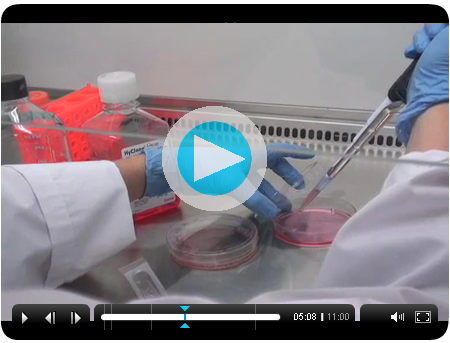
Check out this instruction video on using our adenovirus Cre to knockout LoxP flanked gene in primary mouse embryonic fibroblasts (MEF).
Expand 1 Items
Mouse Krueppel-Like Factor 4 (Klf4) Adenovirus (Ad-M-Klf4)
Supplier: Vector Biolabs
Klf4 of the Klf family of genes was initially identified by Yamanaka and confirmed by Jaenisch as a factor for the generation of mouse iPS cells. Klf2 and Klf4 were found to be factors capable of generating iPS cells, and related genes Klf1 and Klf5 did as well, although with reduced efficiency.Using adenovirus to deliver these transcription factors has 2 main advantages - it does not incorporate into the targeted host and therefore avoids the potential for insertional mutagenesis, and the expression is transient for a brief amount of time in order for effective reprogramming to take place.This adenovirus expresses mouse KLF4, and it can be used in combination with other iPSC factor for the induction of iPSC reprogramming.
Expand 1 Items
AAV-GFP-iCre (AAV1) AAV (AAV1-GFP-iCre)
Supplier: Vector Biolabs
Cre recombinase is used as a tool to genetically modify genes, such as to delete a segment of DNA flanked by LoxP sites in cells or experimental animals.By applying the mammalian codon usage to Cre recombinase, expression of Cre is improved in the mammalian cells. This improved Cre (iCre) gene also reduce the high CpG content of the prokaryotic coding sequence, thereby reducing the chances of epigenetic silencing in mammals. This AAV1 stock expresses an improved Cre (iCre) along with eGFP under a control of the same CMV promoter. The Cre and eGFP was separated by a 2A peptides.
Expand 1 Items
Recommendations will be personalized based on your shopping preferences only if you have given your consent by enabling "Enhance my Shopping Experience" on the "Personal Info page".
Otherwise, you will receive generic recommendations.